

How to Protect Yourself From Coronavirus
You can protect yourself from coronavirus by:
- Washing your hands with disinfectant often.
- Wear a mask over your face and mouth.
- Stay 2 metres apart from others.
- Avoid crowded areas.
- Clean and disinfect on a regular basis.
Despite the fact that we move from the ‘new normal’ back to the ‘old normal’, it is still important to protect yourself from coronavirus. The positive news is that there are multiple easy steps we can take to protect against contracting COVID-19, while also keeping our loved ones, colleagues and neighbours safe.
Here in the UK, it’s paramount that we all follow Government guidelines on how to prevent the spread of COVID-19.
If you are worried that you, your family or co-workers may have been in contact with someone with Coronavirus or have symptoms, stay at home and get a test. You can get a test from the NHS, or you can bring rapid testing to your home or workplace with our COVID-19 Antigen Rapid Testing Kits – available with next day delivery.
1. Hands: Wash Your Hands With Disinfectant Often
Wash your hands regularly with disinfectant soap for at least 20 seconds to improve cleanliness and reduce the risk of illness. This is especially important if you’ve been to a public space, or after coughing, sneezing or blowing your nose.
Important times to remember to wash your hands:
· Before eating or preparing food
· Before touching your face
· Before leaving the house
· After leaving a public place
· After using the bathroom
· After coughing, sneezing or blowing your nose
· After handling your mask
· After caring for someone sick or in need of care
When washing your hands, take care to cover all surfaces of your hands including your palms, back of the hand, in-between the fingers, fingernails and nail beds, all digits and wrists.
If you’re wondering how to track if you’ve been washing your hands for 20 seconds, sing the ‘Happy Birthday’ song as a fun way to know that you’ve safely disinfected your hands!
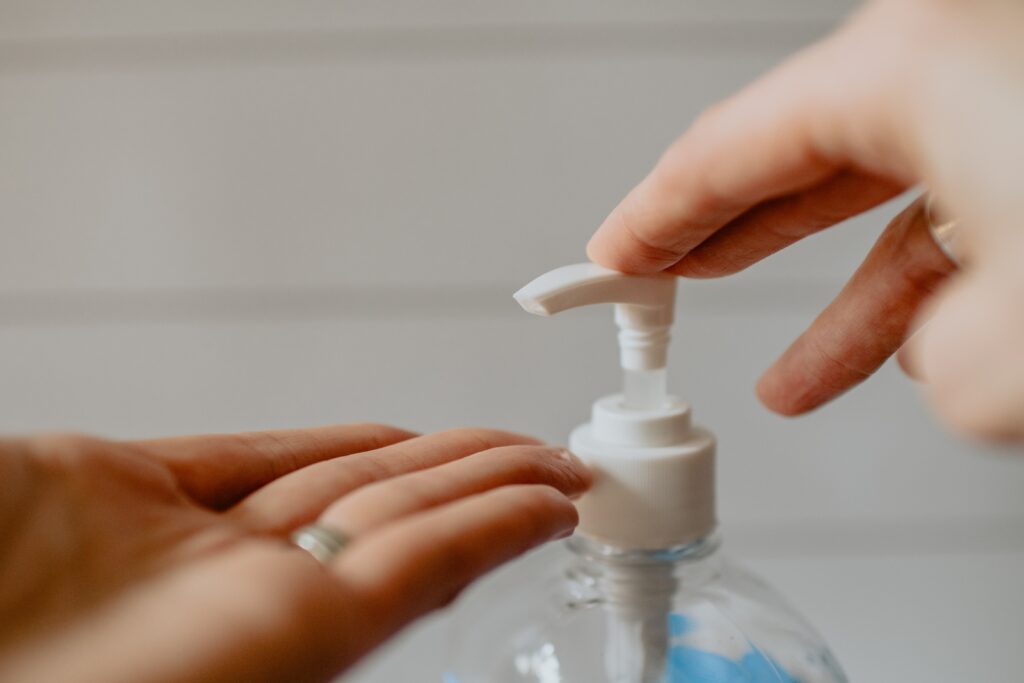
If washing your hands with soap and water is not an option, use a hand sanitiser that contains at least 60% alcohol for a safe and reliable way of cleaning your hands.
2. Face: Wear A Mask Over Your Mouth & Nose
Wearing a mask in an enclosed public space is only mandatory in the UK (unless exempt), because it is an easy and highly effective way of protecting against the virus. Wearing a medical mask or face covering will protect you and others in your community against contracting or carrying COVID-19. Hence, wearing a mask will help reduce the overall spread of the virus.
It’s important to remember that you may be a COVID-19 carrier even if you do not feel sick – wearing a mask will help prevent you from unknowingly spreading Coronavirus to your friends, family or members of the public. However, if you do have COVID-19 symptoms, have been diagnosed with COVID-19 or been in contact with someone who has COVID-19 – you should stay at home and self-isolate for the required time.
Things to remember when wearing a mask:
· Your mask must cover your nose and mouth to be effective.
· Always take your mask on and off with clean hands.
· Use a small mask bag when carrying your mask in public to contain any germs collected.
· Regularly wash your medical masks or face coverings, or if using disposable masks, ensure you replace you mask each time you use it.
· Maintain social distancing when wearing your mask.
· Cut the ear loops when disposing of your disposable face masks to protect against environmental pollution. Always dispose of your mask in a contained refuge centre.
Top Tip: If you have to wear a mask regularly for long periods of time and suffer from friction rubbing behind your ears, invest in a reusable ear saver to attach your mask to.
3. Space: Stay 2 Meters Apart
When outside, it is imperative that we maintain social distancing, which currently stands at a 2 meter plus distance from you and any members outside of your household or support bubble.
Maintaining a six-foot distance from others will help protect against catching and spreading the virus. Remember, not everyone who has COVID-19 has symptoms – even your loved ones could be unknowingly carrying Coronavirus.
If you are unsure how much this distance should be, a good estimate is maintaining an arms-length distance between both people, between you and others.
Here are some additional tips to help maintain the national rule of ‘Hands. Face. Space’ and measures you can take to further protect yourself, your loved ones and your community against Coronavirus.
4. Avoid Crowded Areas
Being in a crowded area will increase the risk of catching COVID-19. Each public space you enter should be assessed and monitored, and you should only enter crowded areas if it is absolutely necessary to do so.
This is particularly important for any poorly ventilated, indoor areas which do not offer fresh air from ventilation, open windows or open doors.
5. Clean & Disinfect Regularly
Safety starts in the simple, everyday activities. Ensure you clean and disinfect frequently touched surfaces such as tables, door handles, switches, countertops, desks, phones, remotes, keyboards, toilets, taps and sinks. You can use either disinfectant spray or wipes to quickly and effectively clean regularly touched areas.
For businesses and workplaces, disinfectant products should be made readily available to customers and employees. Regular use of a sanitising station should be encouraged throughout the company to help keep everyone safe.
For shops, it is vital that areas such as tills, trolleys, baskets and product displays are regularly cleaned to reduce the risk of spreading COVID-19 within the community.
For more information about how to stay safe against Coronavirus, and leading pandemic protection products, see the MorSafe website now.


Leave a Reply