
Do You Need Eye Wash in First Aid?
Yes – you need eye wash in first aid. Appropriate eye wash solutions and equipment should be provided as part of your first aid kit, especially in the workplace. Work-related eye injuries are highly common and simple first aid and eye wash will help instantly reduce any damage or irritation to the eye.
The first few moments after an eye injury has occurred are crucial – especially if the injury involves any foreign bodies or chemicals – so access to eye wash or clean, running water needs to be a first aid priority for work environments.
If mains tap water is not readily available for eye irrigation, it is recommended that at least a litre of sterile water or eye wash is available in a sealed, disposable container. Eye wash solutions should be made available at every first aid point and additional eye washing stations should be made in extremely hazardous environments.

What Is Eye Wash Saline?
Eye wash, also known as saline solution, is a medical solution made from purified water to soothe and treat eye problems. Eye wash saline should be used if you can feel irritation, burning, stinging or excessive itching in one or both of your eyes.
Saline solution is designed to provide relief from irritation caused by air pollution and allergens, like pollen; but it is also designed to be used in eye related first aid, such as removing a foreign object from the eye and treating any scratches.
Although eye wash and eye drops are very similar, it’s important to note that they are not the same. Standard eye drops are designed to lubricate, and help soothe dry eyes, whereas, eye wash is used to treat eye issues, wash the eye area, remove particles in the eye and soothe irritation caused by external substances.
What Is an Emergency Eye Wash Station?
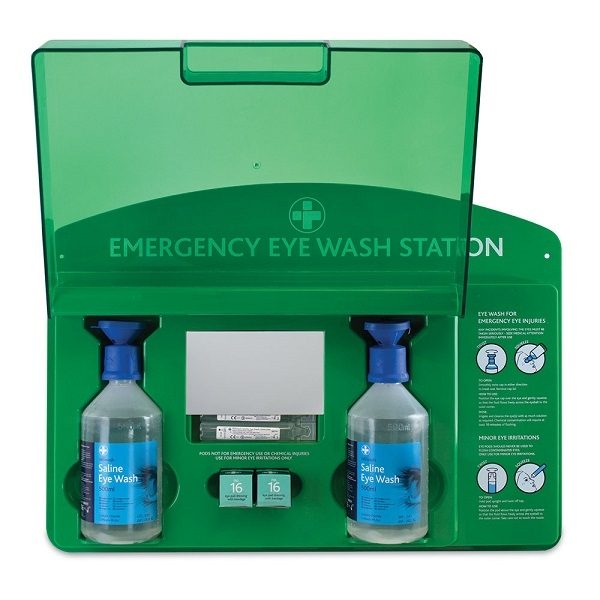
An emergency eye wash station is an area clearly marked in the work environment where workers can quickly and easily go to flush away any hazardous substances or irritation in a safe manner. Eye washing stations are particularly important for manufacturing environments or workplaces where there is a risk of objects or chemicals entering the eye.
Emergency eyewash stations are ease to come by from first aid specialists, such as MorSafe, and can easily be installed within your workspace. Our Covered Eyewash Station With Mirror includes all the necessary equipment to treat eye injuries including saline solution, eye dressings, eyewash pods and more.
How Do You Use Eye Wash Solutions?
If you wear contact lenses, remove them first. Then, you can apply the solution in two ways:
With a nozzle applicator:
1. Lean back and open your eyes wide.
2. Squeeze the bottle to add the solution. Don’t let the applicator make contact with your eye’s surface.
3. Flush your eyes as much as you need to.
With an eye cup:
1. Rinse the cup with some of the solution.
2. Fill half the cup with the eyewash.
3. Put the cup over your eye. Be sure to hold it there steadily to avoid leaks.
4. Tilt your head back, open your eye wide, and move your eyeball around as you slowly pour the solution to help the liquid wash the whole surface.
5. Rinse the cup with clean water.
No matter which way you choose to flush your eyes, wait 5 minutes before you put your contacts back in, or if possible, avoid wearing contacts for the next hour.
So, yes, every workplace’s first aid kit needs to be equipped with an eye wash solution. Workplaces where there is an increased risk of eye injury should have an appropriate number of emergency eye wash stations so risks can be quickly and efficiently attended to; remember, time is of the essence when it comes to eye damage.
By Laura Mallinson for Morsafe Supplies.







Leave a Reply