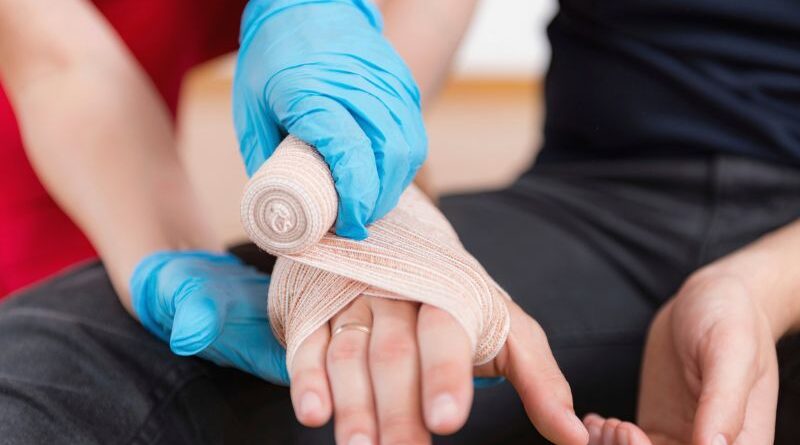
first aid

Do Teachers Need First Aid Training?

Do Teachers Need First Aid Training?

The simple answer is - yes. Teachers are responsible for the well-being of their students, and having first aid training can certainly help fulfil this responsibility. Teachers are often the first responders in the event of any accidents that happen in the classroom or school, and first aid training will equip teachers with the skills they need to provide immediate care to the pupils who may be injured.  Is There Any Legislation Regarding First Aid Training in Schools? Legislation regarding first...

Read more...
What Equipment is Used to Measure Blood Pressure?

What Equipment is Used to Measure Blood Pressure?

In short - blood pressure can be measured using either a digital blood pressure monitor (for automated readings) or by an instrument called a sphygmomanometer (for manual readings).  Although blood pressure machines vary, they will all contain an arm cuff which is wrapped around the upper arm and pumped with air until it tightens. This tightening feeling means the blood pressure is being measured, and although it may feel uncomfortable, it only lasts for a few seconds.  But, before...

Read more...
What Is A First Aid Accident Record Book?

What Is A First Aid Accident Record Book?

A first aid accident record book is an essential document used by employers and employees to record and report details of any specified injuries and incidents on the work premises and what action was taken.  This enables businesses to comply with legal requirements under the Social Security and Health and Safety legislation, and allows for employers to identify any commonly occurring injuries so that they can take preventative action. What are the laws around recording accidents? Many people think that the accident...

Read more...

Where Should The First Aid Kit Be In A Workplace?

There is no specific location in which a first aid kit must be stored, but it must be easily accessible, clearly visible and signposted by a ‘first aid kit’ sign nearby, so it can be found easily.  Their location should depend on the layout of the workplace and the findings of your first aid needs assessment. For example, you may find that certain areas of the same floor have higher level hazards and therefore need more kits or require moving...

Read more...
How To Treat Minor Burns Or Scalds

How To Treat Minor Burns Or Scalds 

Burns are tissue damage from hot liquids, the sun, flames, chemicals, electricity, steam and many other causes. Major burns need emergency medical help, whereas minor burns and scalds can usually be treated with first aid. Here are 4 simple steps you must follow to treat any minor burns or scalds and prevent further damage to the skin.  This is how to treat minor burns or scalds: Cool the burnApply burn dressingCover the burnTake pain relief (if necessary) 1. Cool The Burn Immediately stop...

Read more...
How Do Breathalysers Work?

How Do Breathalysers Work?

A breathalyser works by exhaling through the mouthpiece into a test chamber filled with a solution of potassium dichromate, sulfuric acid, silver nitrate and water. The measurement is based on the chemical reaction. During this reaction, the reddish-orange dichromate ion changes colour to the green chromium ion when it reacts with the alcohol, and the degree of the colour change is directly related to the level of alcohol in the exhaled breath. What Are Breathalysers Used For?  The world’s...

Read more...
the best disinfectant wipes

The Best Disinfectant Wipes 

Disinfectant wipes are key to limiting the spread of germs and bacteria, ensuring a safe working (or home) environment. Work surfaces that are frequently touched should be cleaned and disinfected regularly, such as:  telephones, computer equipment, door handles and drawers.  But with so many cleaning products out there, it can be difficult to know which to use. To help narrow down your choices, we have compiled a list of our 4 best disinfectant wipes below.  The 4 Best Disinfectant Wipes Are: Clinell...

Read more...
How often should a defibrillator be checked?

How Often Should A Defibrillator Be Checked?

The British Heart Foundation suggests that a defibrillator should be checked once a week to ensure the  life-saving device remains in working order, with the main checks being: it’s overall condition, the battery, it’s location and spare electrode pads.  Ensuring you check your AED once a week is a really quick and simple task to carry out but, rest assured should you need to use it, you know everything is in order. How To Check A Defibrillator  Although the...

Read more...
are defibrillators mandatory in the workplace

Are Defibrillators Mandatory In The Workplace?

In short - there are currently no laws enforcing the provision of defibrillators in the workplace. Although they are not mandatory, the British Heart Foundation, IOSH (Institution of Occupational Safety and Health), and the Resuscitation Council UK recommend that defibrillators should be made available in the workplace, in order to save lives. The HSE also states that a workplace's First aid needs assessment may identify a defibrillator as a need. First Aid Needs Assessment As

Read more...
how to use a defibrillator

How To Use A Defibrillator  

A defibrillator is a device that gives a high energy electric shock to the heart of someone who is in cardiac arrest. This high energy shock is called defibrillation, and it's an essential part in trying to save the life of someone who’s in cardiac arrest. If you are around when someone has sudden cardiac arrest, knowing how to correctly use an automated external defibrillator (AED) will massively increase their chances of survival before an ambulance arrives....

Read more...
Privacy Overview
morSafe

This website uses cookies so that we can provide you with the best user experience possible. Cookie information is stored in your browser and performs functions such as recognising you when you return to our website and helping our team to understand which sections of the website you find most interesting and useful.

You can find full details in our privacy notice and cookie policy.

You can update your cookie preferences at any time by clicking 'Cookie Preferences' in the footer of our site.

Strictly Necessary Cookies

Some cookies are required for this site to function correctly, and store your cookie preferences. These can't be disabled.

3rd Party Cookies

We use Google Analytics. Google Analytics gathers information about the use of our website by means of cookies. The information gathered is used to create reports about the use of our website. You can find out more about Google’s use of information by visiting https://www.google.com/policies/privacy/partners/ and you can review Google’s privacy policy at https://policies.google.com/privacy. The relevant cookies are: persistent cookies.

We use Google Ads. Google Ads uses cookies to analyse the use and performance of our website and services. You can view the privacy policy of this service provider at https://policies.google.com/technologies/partner-sites. The relevant cookies are: persistent cookies.