

How Often Should A Defibrillator Be Checked?
The British Heart Foundation suggests that a defibrillator should be checked once a week to ensure the life-saving device remains in working order, with the main checks being: it’s overall condition, the battery, it’s location and spare electrode pads.
Ensuring you check your AED once a week is a really quick and simple task to carry out but, rest assured should you need to use it, you know everything is in order.
How To Check A Defibrillator
Although the majority of defibrillators carry out daily self checks to ensure everything is in order, it is still good practice to conduct weekly inspections on your defibrillator, including:
1. The Battery Test
If your model has a “test” button, simply press it. If it doesn’t have a battery test button, turn the device on. It is working correctly if it prompts you to apply the electrodes. Always store a backup battery with your AED, as the primary battery can lose charge quickly. To replace, remove the primary battery and insert the backup battery. Turn the device on to ensure it is working.
It’s important to know that the typical shelf life of batteries (and pads) is 2 to 5 years, depending on the defibrillator model. To check this, please check your user manual, consult the product detail page on our website or check the expiry date on your pad or battery.
2. The Expiry Date
Check the expiry date on the sticky pads. If they are out of date, they will need replacing. To check this, you will have to open the defibrillator case. When the case opens, the defibrillator may automatically switch on and begin instructions – this is normal and should be ignored if just carrying out a check. Once the case is closed, it will switch off automatically.
3. Overall Condition
Perform an overall check to ensure the defibrillator is clean with no visible signs of contamination/damage.
4. Stock Check
Check your supply stock by ensuring it includes sealed and unexpired electrodes, razors, gloves and scissors.
5. Its Location
Last, but certainly not least, you must check it is located in the correct location. Your AED cabinet should be mounted in an unobstructed area, 48 inches above the floor, to ensure that anyone can access it – even wheelchair users – in the event of an emergency.
Whoever oversees maintaining your organisation’s AED should be the one to regularly check and follow up on maintenance issues, and possibly train and retrain your staff members to use the AED’s.
At Morsafe, we stock a wide selection of defibrillators, such as:
ZOLL® AED 3 CPR Uni-Padz Universal Adult/Paediatric Electrode Pads

The ZOLL AED 3 Pads – CPR Uni-padz universal (adult/paediatric) is a one-piece electrode with built-in Real CPR Help technology. This clever device features an accelerometer built into the pads to measure rate and depth of compressions so the ZOLL AED 3 can provide voice, text and real-time visual feedback to help the rescuer on proper CPR rate and depth
Powerheart G5 Defibrillator Unit – Semi Automatic
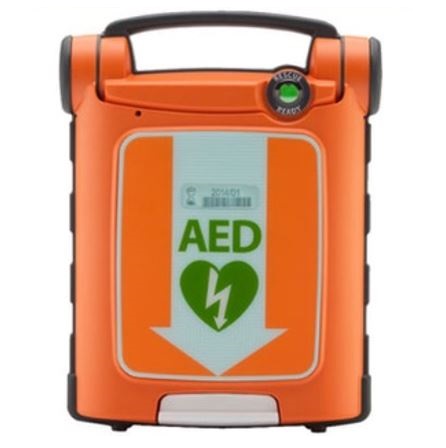
The Powerheart G5 is the first AED to combine semi automatic shock delivery, dual-language functionality, variable escalating energy, and fast shock times to help save an SCA victim‘s life.
Lifepak CR2 Defibrillator Unit – Semi Automatic

The Lifepak CR2 is easy to use and the only AED that allows CPR compressions during heart rhythm analysis. Featuring cprINSIGHT analysis technology, child mode button and ClearVoice technology.
Learn how to properly use a defibrillator here and do not hesitate to get in touch if you need help in buying the right defibrillator for your workplace. Browse our full range of first aid equipment and related products on our website.
Written by Kate, for Morsafe Supplies.





Leave a Reply