

PPE Requirements for the Oil and Gas Industry
Health and safety is the most important part of any business, but particularly so in the oil and gas sector, which is in fact classed as a major hazards industry. Commonly found hazards can include exposure to heat and flame, contact with harmful substances and dealing with hydrocarbon releases. Workers are also expected to work in confined spaces and contaminated conditions – which can be life threatening if proper equipment is not provided. So, what are the legal requirements for PPE in this industry?
Common PPE requirements for the oil and gas industry include:
- Body protection
- Head protection
- Hand protection
- Eye protection
- Respirators and dust masks
- Hearing protection
1.Body Protection
Flame-resistant clothing is an absolutely essential requirement for workers in the oil and gas industry as there is a high potential for exposure to flames or electrical arc flash. Flame-resistant clothing is designed to protect workers from the risk of fires and explosions, made from materials that self-extinguish when exposed to flames or heat.
There are three main types of flame-resistant body protection: shirts, trousers, and coveralls. Shirts and pants protect the torso and legs, while coveralls provide complete body coverage from head to toe.
Without this flame protective clothing, employees are at a larger risk of serious burn injuries, which can certainly be life-threatening. What’s more, flame-resistant body protection can also help to prevent the spread of fires, which can lead to more widespread damage and potential loss of life to those involved.
2. Head Protection
It’s no secret that the oil and gas industry can be a hazardous environment, with a variety of potential dangers such as falling objects, electrical hazards, and chemical exposure, which can all pose a serious risk to workers’ safety.
Industrial head protection, such as hard helmets, are essential personal protection equipment to help to protect workers from falling objects and debris, as well as from overhead electrical hazards or fixed objects workers could bump into.
Constructed with a hard outer shell made of materials such as plastic or fibreglass, hard hats are designed to provide protection to the head and skull from impact and penetration, reducing the risk of head injuries. Some can also be equipped with protective face shields and ear protection, providing additional protection for workers. Head protection is therefore an absolute no-brainer when it comes to this industry (pardon the pun).
3. Hand Protection
Another body part which may be exposed to the hazards of the job include the hands, which is why hand protection is vital for workers in the oil and gas industry. These hazards may include cuts and punctures from sharp objects, exposure to chemicals, extremely hot temperatures and electrical hazards.
The use of protective gloves, for example, will help protect the skin from burns, irritation and cuts, as well as protecting from solvents, oil and other more harmful chemicals workers may encounter on the job.
4. Eye Protection
If workers are often exposed to flying particles; molten metal; hazardous, acidic, or caustic liquids, gases, or vapours; or harmful light radiation, eye protection is required on the job.
There are a number of different types of eye protection available. Safety glasses with protective side shields are super effective at protecting against flying objects, while safety goggles can be worn while working around vapour, gas or liquid hazards. There are also face shields that are designed to protect the entire face from both chemicals and flying objects, however shouldn’t be used as a replacement for glasses or goggles, and instead used in conjunction for extra face protection.
Additionally, workers may also be required to wear eye protection when welding or working with other high-heat equipment to protect against ultraviolet radiation, sparks, glare and bright flashes of light. Without this protection, workers are very likely to injure themselves and their eyesight.

5. Respirators and Dust Masks
If workers are exposed to unsafe atmospheric conditions, they will be required to wear respirators and dust masks to protect them from inhaling harmful fumes, vapours, dust and other hazardous airborne particles.
These particles can come from a number of sources, including fracking, drilling and processing equipment, and can cause a range of serious health problems if inhaled. Just some of these health issues include respiratory infections, lung cancer, and chronic obstructive pulmonary disease (COPD). What’s more, some chemicals used in the oil and gas industry, such as hydrocarbons, can be highly toxic, and can cause additional health issues if entered the body.
Wearing a respirator or dust mask can therefore help protect workers from these hazards by filtering out harmful particles before they can be inhaled.
There are a range of different respirators that come with varying levels of protection, and it’s essential that workers use the right one for the job while following the manufacturer’s instructions. If exposure levels are lower, dust masks are the better option as they’re less effective than respirators.
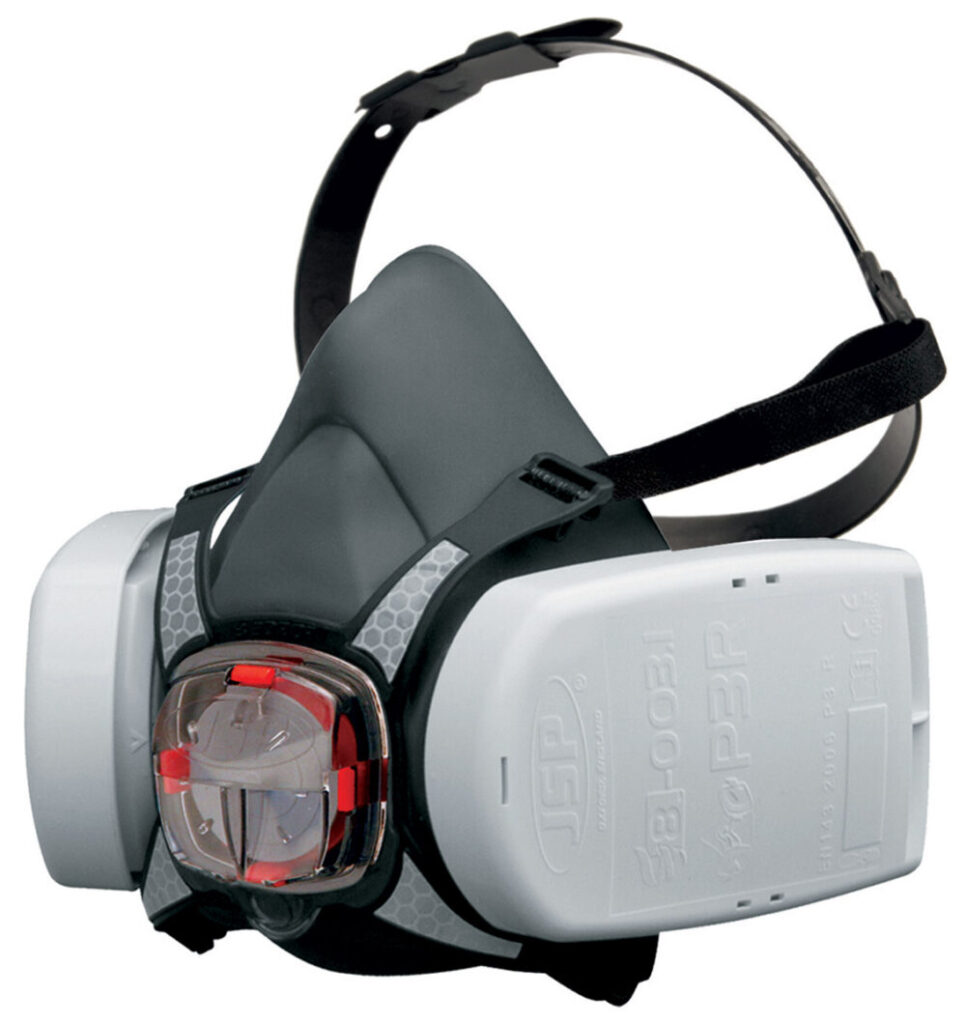
Force 8 Half Mask & P3 Filter
The Force 8 half mask with P3 filter features a durable thermoplastic rubber mask for superior fit to most face shapes with a fully adjustable 4-point cradle suspension ensuring an effective facial fit. To be used for many applications, providing filtering protection against particulates, many gases and vapours found in the oil & gas industry.
6. Hearing Protection
The last, but certainly not least, requirement for the oil and gas industry is hearing protection, designed to protect their hearing from loud, damaging noises caused by fracking, drilling and other operations. These noise levels can be incredibly high and are likely to cause permanent hearing loss over time if the worker is not protected properly.
Ear defenders and earplugs are designed to reduce the amount of noise that reaches the ear, reducing or eliminating hearing loss.
Ear Defenders
Ear defenders, also known as ear muffs, are designed to cover the entire outer ear to form an air seal so the entire circumference of the ear canal is blocked. The protection comes from acoustic foam which absorbs sound waves by increasing air resistance, thus reducing the amplitude of the waves.
High Performance Alpha Solway Ear Defender 34 SNR
The Alpha Solway Ear Defender 34 SNR is a high performance, comfortable ear defender without the weight, and fully adjustable to provide a superior fit for most head sizes.
Some of its benefits include:
- High attenuation – SNR 34dB
- Low pressure but high performance
- Easy on head adjustment thanks to individual slide action
- Large ear cushions allow freedom to fit majority of ears for a comfortable fit
- Quality gloss finish for easy maintenance
Ear Plugs
To ensure earplugs give you the best protection, choose ones with an SNR figure of at least 20dB.
Earplugs are available in a wide variety of forms, so it’s important the earplugs chosen for the job are intended for hearing protection. Many ear plugs sold by pharmacies and sports shops are designed for swimming, or to reduce irritating background noise, and don’t protect effectively against damaging levels of noise.
Non Detectable Disposable Foam Ear Plugs
Made from soft yellow foam, these plugs gradually expand and so conform to exactly the size and shape of the ear canal. With a 37 SNR rating, they provide excellent protection in very noisy environments.
For more information on PPE for your workplace, don’t hesitate to get in touch with our friendly, expert team on 01686 611 377, today.
Written by Kate, for MorSafe Supplies.



Leave a Reply