

What Are COSHH Hazardous Substances?
COSHH hazardous substances are substances which have the potential to cause harm to the health of a person, and come in a variety of forms, including chemicals, vapour, dust, fibres, gases and bacteria, just to name a few. COSHH stands for ‘The Control of Substances Hazardous to Health’ and is a law that requires employers to follow a set of health and safety regulations to control hazardous substances in the workplace.
Other forms of hazardous substances include asbestos, radioactive elements and lead – but these aren’t included in the COSHH regulations. This doesn’t mean that employers shouldn’t protect their employees from these dangerous materials, they just have their own specific rules that need to be followed, for example, ‘The Control of Asbestos Regulations 2012’.
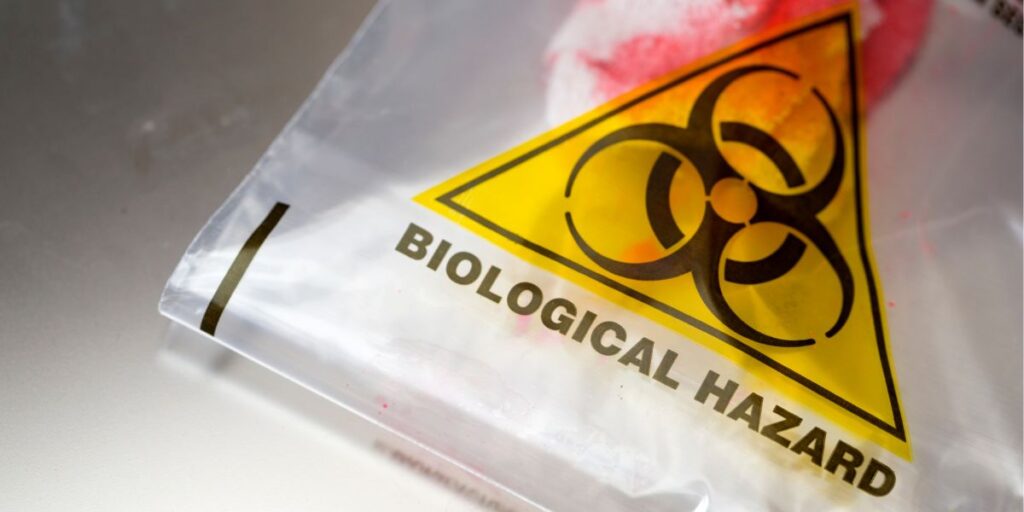
Where Are Hazardous Substances Found?
Regardless of the industry, most workplaces will have potential hazardous substances, even those thought to be lower risk, such as retail shops and offices. That being said, there are some industries/job roles that are more likely to be exposed to hazardous substances than others, due to the nature of the work. For example:
- Paint sprayers – Isocyanates from the paint.
- Agricultural workers – Dust, biological agents, agricultural chemicals and fertilisers, animal faeces and soils.
- Carpenters – Dust from the wood.
- Cleaners – Cleaning chemicals such as bleaches, cleaning sprays, and biological agents.
- Dentists – Latex, drugs, biological agents and cleaning chemicals.
- Mechanics – Vehicle cleaning products, greases, fuels, oils, paint spraying, welding fumes and exhaust emissions.
The regulations place COSHH responsibilities on both employees and employers (but mainly on employers) for dealing with hazardous substances in the workplace.

Control Measures For COSHH
The 4 types control measures for COSHH include:
- Exposure prevention
- Change the process
- Supervision
- Correct PPE
1. Exposure Elimination
The first type of control measure for COSHH requires exposure to be prevented. This can be done by eliminating your use of hazardous substances in the workplace and therefore getting rid of the risk all together.
This might mean changing a process to prevent the creation of the substance. Although it may be more work, it will result in COSHH no longer applying, as the hazardous substance wouldn’t be an issue anymore.
The second way you can prevent exposure to a hazardous substance is to replace it with a less hazardous alternative. This process reduces the risk, rather than eliminating it completely. A good example of this could be switching from an oil-based to a water-based paint, or replacing a chemical-based cleaning product with a more natural option.
Another option would be to dampen down dust during drilling to prevent it becoming airborne. By doing so, the substance is still there, but it’s much less hazardous as it can’t be breathed in.
2. Change the Process
You could also review the way you work and find ways you can change the process to reduce exposure to hazardous substances in the workplace.
For example, it might be normal practice for workers or cleaners to sweep up after the work has finished, but this can cause settled dust to become airborne. Instead, you may decide to damp down before cleaning up to help prevent dust clouds, making the workplace a safer working environment.
3. Supervision
As an employer, it’s your duty to ensure that the COSHH control measures are working properly through regular supervision, checks and monitoring. These controls may include things such as reduced time exposure, rules and prohibitions, and reducing the amount of workers exposed to the hazardous substances.
For example, it might be a good idea to enforce that only certain people are allowed within a COSHH area, and that those people must have specific training.
4. Correct PPE
The use of correct PPE is another important control measure. While it doesn’t reduce the hazard risk, it is certainly an effective way to prevent the dangerous effects, as long as the PPE is worn correctly. PPE can include gloves, goggles, masks etc.
Nevertheless, as it doesn’t reduce the hazard, if PPE fails, it exposes the wearer to the potential health risks . For this reason you should never rely on PPE alone, and instead combine a number of control measures, as well as PPE. Each measure reduces exposure a little bit more, and if one control fails, at least you have others to fall back on.
Shop our wide range of hazardous substances storage and disposal products on our site, and for more tips from our experts, check out our blog page. Get in touch with any questions you may have about hazards at your workplace.
Written by Kate, for Morsafe Supplies.





Leave a Reply